
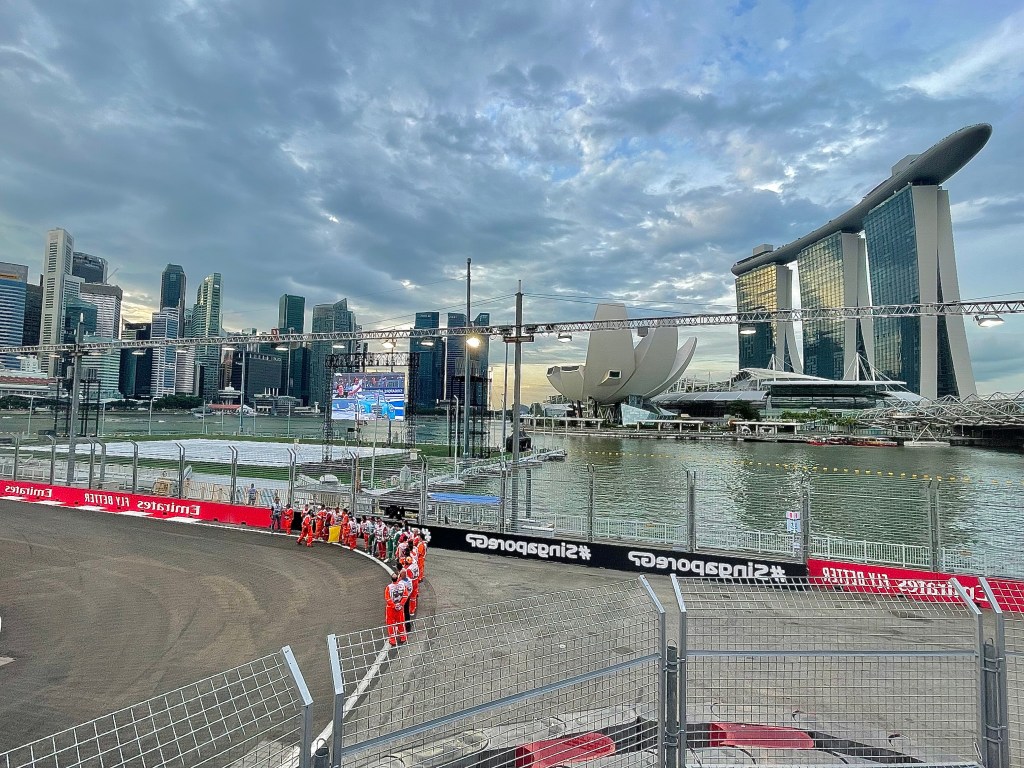
The Formula 1 drivers’ parade has been a longstanding tradition in Formula 1. Meant to bridge the gap between drivers and fans, it heightens the pre-race build-up and gives the media one last chance to capture the drivers’ thoughts before lights out.
But is the current drivers’ parade format doing a good enough job? Could more be done to improve the experience for Formula 1 fans at the track and watching around the world?
The Formula 1 Drivers’ Parade During Covid
Back in 2022, in a post-Covid world, I attended the Singapore Grand Prix. It was an unforgettable event that cemented my love for Formula 1.
One thing that stood out was the drivers’ parade format. To limit close contact, Formula 1 had temporarily ditched the traditional drivers’ parade truck and replaced it with twenty vintage cars. Each pair of teammates paraded in their own car around the track.

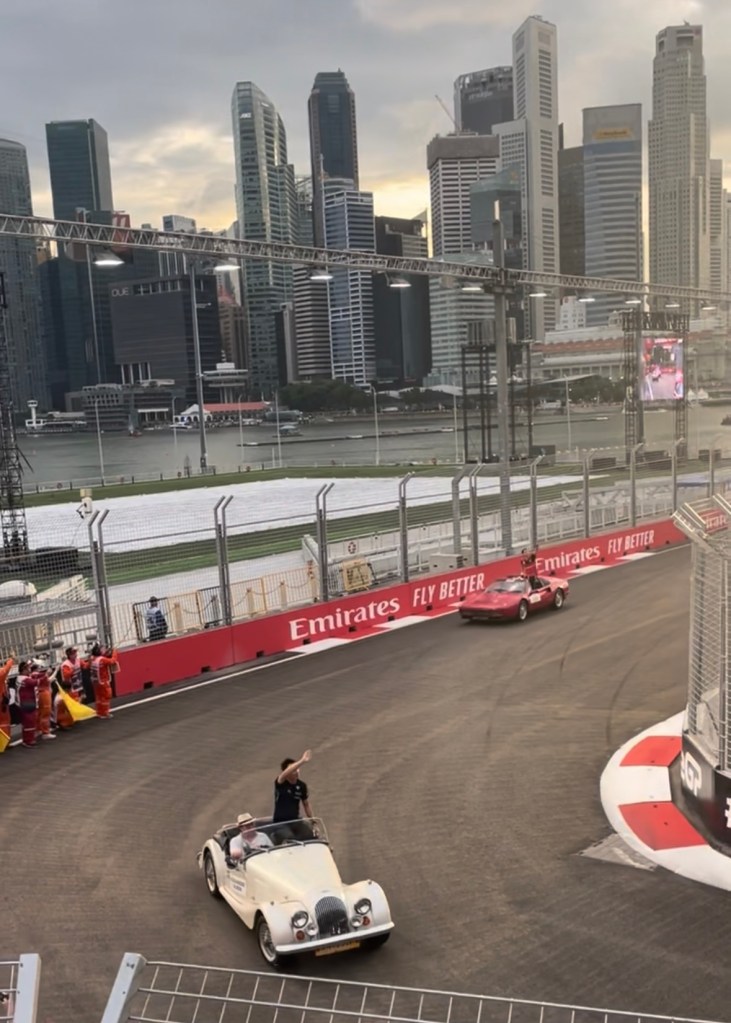
From the Bay Grandstand, fans could line the barriers as the drivers passed beneath us at Turn 18. The atmosphere was electric: the cheers grew louder as favourites came by. It felt personal. It felt like celebration.
Fast forward to 2025, when I attended the Spanish Grand Prix in Barcelona. By then, the traditional F1 parade truck had returned for the majority of races. But the difference was striking.
In truth, the experience felt flat. The truck passed by in seconds, and before the crowd could even react, it was gone. Even in the grandstands, you could feel the disappointment: a collective, unspoken “Is that it?”
What Is the Purpose of the F1 Drivers’ Parade?
The history of the drivers’ parade stretches back decades, with versions of it appearing as early as the mid-20th century. Today, the slow-moving truck has become the default format at most Grands Prix.
At its core, the purpose is simple: connect the drivers with the fans. On a race weekend where drivers are usually helmeted, hidden behind hospitality units, or locked in their garages, the parade is one of the few moments when they’re visible as people, not just as competitors. It’s supposed to amplify the anticipation and give fans the emotional jolt that sets the tone for race day.
From a practical standpoint, the truck also helps broadcasters. With all the drivers in one place, media teams can grab quick interviews and soundbites to enrich the TV coverage. That value shouldn’t be dismissed; it’s an efficient solution.
But efficiency doesn’t always equal engagement.
Why the F1 Drivers’ Parade Truck Isn’t Working
Across the races I’ve attended since, including both Spain and Hungary, the drivers’ parade has felt uninspired. The flatbed truck passes too quick, barely giving fans the chance to spot their favourite drivers before it had already passed by. The drivers themselves are often distracted, also, wrapped up in conversations and only sparing a brief wave or glance to the cheering crowds.
This lack of connection undermines the very purpose of the parade. Instead of being a memorable prelude to the race, it risks becoming background noise in a weekend that should be full of standout moments.
What Formula 1 Should Do to Fix the Drivers’ Parade
For me personally, Formula 1 never should have abandoned the individual car parade once Covid restrictions eased. At tracks where logistics allow, the FIA and promoters should strongly consider bringing it back.
That format simply offers more:
- Better visibility: Fans get a longer chance to see their favourite drivers.
- More engagement: Drivers are more likely to wave, smile, and acknowledge fans when they aren’t bunched together.
- A stronger build-up: The staggered procession creates a sense of anticipation, rather than a single blink-and-you-miss-it moment.
And if interviews are non-negotiable for broadcasters, then why not add a short, structured media slot after the parade — on the grid, or in front of the fans in the main grandstand? That way, media still get their access without compromising the fan experience.
The Future of the F1 Drivers’ Parade
Formula 1 has worked hard to improve fan engagement, from open paddocks to interactive apps and better broadcasting. But the drivers’ parade remains a weak link in the weekend.
Done right, it could be more than just tradition. It could be a genuine highlight, one that sticks in fans’ memories as much as the race itself.
That’s why experiments like the LEGO Drivers’ Parade in Miami 2025 are so exciting. They bring creativity, humour, and shareable moments that spread far beyond the circuit. When fans post these clips online, they go viral, drawing new audiences into the sport. Mixing up the format with one-off ideas like this proves that Formula 1 doesn’t have to choose between tradition and innovation — it can do both.
As Formula 1 heads into 2026, the sport has a choice: keep prioritising efficiency, or reimagine the drivers’ parade as the fan-first celebration it was always meant to be, while leaving room for those creative flourishes that get the whole world talking.
 Thinking Formula
Leave a comment